
Feeding Tift County: The Quiet, Relentless Work of the Tiftarea Community Food Bank
In Tifton, Georgia, a small nonprofit has spent over four decades doing one of the most essential jobs a community can ask of anyone: making sure its neighbors don't go hungry. The Tiftarea Community Food Bank has served Tift County since 1984 — long enough to have become the kind of institution people quietly count on, without always realizing how fragile its funding really is.
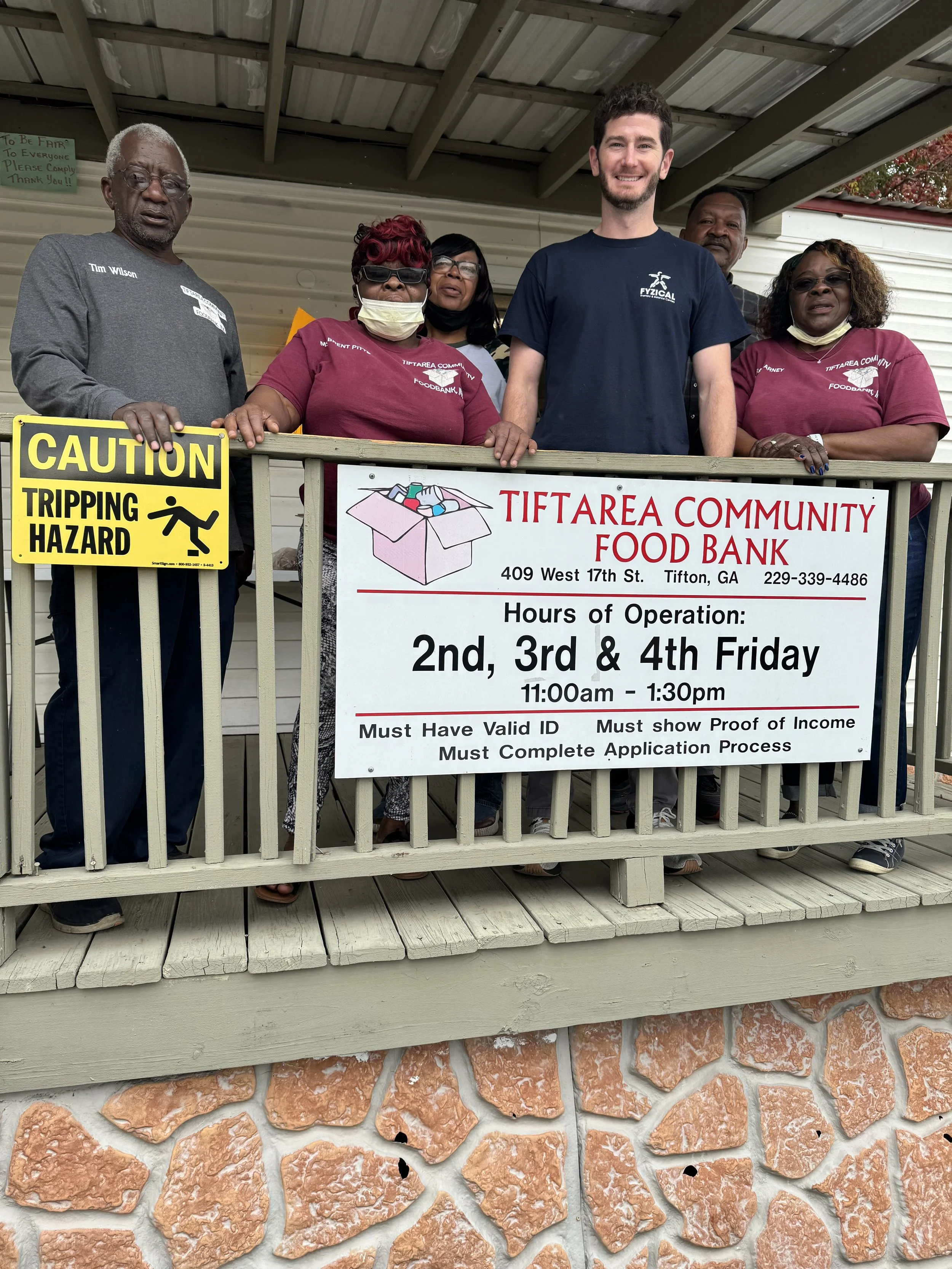
The Tift area Community Food Bank team — and the sign that tells the county exactly when the doors open.
A County That Needs It
Tift County's poverty rate runs around 21%, and in Tifton itself — the county seat, where the food bank is based — it climbs closer to 23%. Median household income sits near $45,000 a year, well below the state average. Statewide, close to one in five Georgia children live in a food-insecure household.
Numbers like these turn concrete on a Friday afternoon: a line of cars outside a distribution site, people who worked all week and still came up short, grandparents raising grandchildren on fixed incomes, families choosing between rent and groceries. That's the reality the food bank exists to soften.
Volunteer-Run, Top to Bottom
There is no paid staff. Every hand that sorts a can, loads a box, or answers the phone belongs to a volunteer — community members like President Marilyn Scott and Secretary David Shepard, who coordinate everything from food orders to distribution days on their own time.
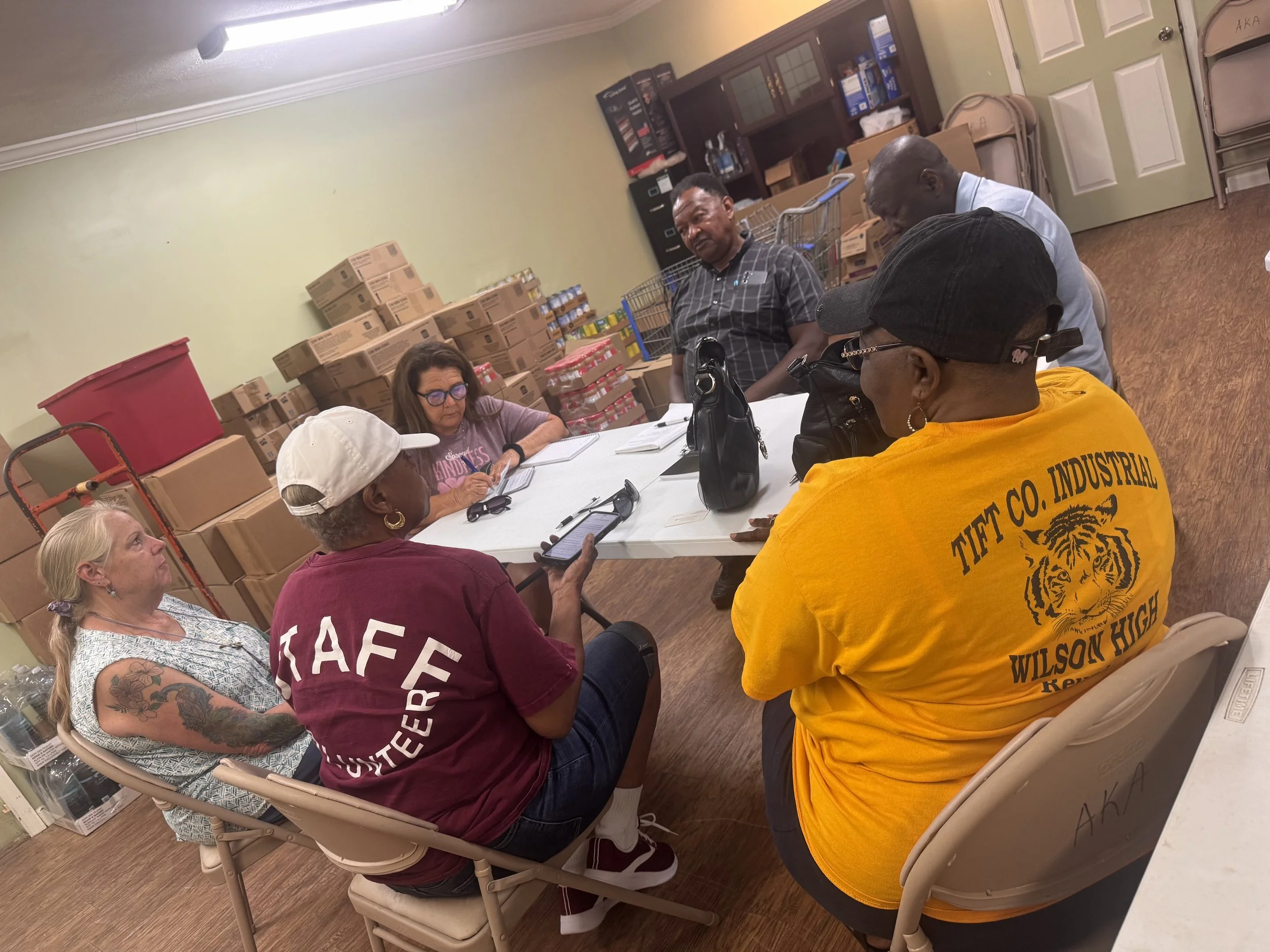
No paid staff here — just volunteers, planning the next distribution day together.
Distribution runs the 2nd, 3rd, and 4th Friday of each month, 11:00 a.m. to 1:30 p.m., at 409 West 17th Street. Visitors need a valid ID, proof of income, and a completed application — a simple process, but one that still takes hands to manage every distribution day, month after month, without pay.
The Money Problem
Here's the part that doesn't show up in a smiling photo: food banks like this one don't just receive donated food — a significant share of what they distribute, they have to buy, often through regional partners like Second Harvest of South Georgia.
As grant funding has dried up, the food bank has leaned harder on cash reserves just to keep purchasing food. Without steady grants, donations, and drives from churches, schools, banks, and local businesses, the shelves don't stay stocked — which is why the organization keeps appealing for both donations and volunteers just to maintain what it already does.
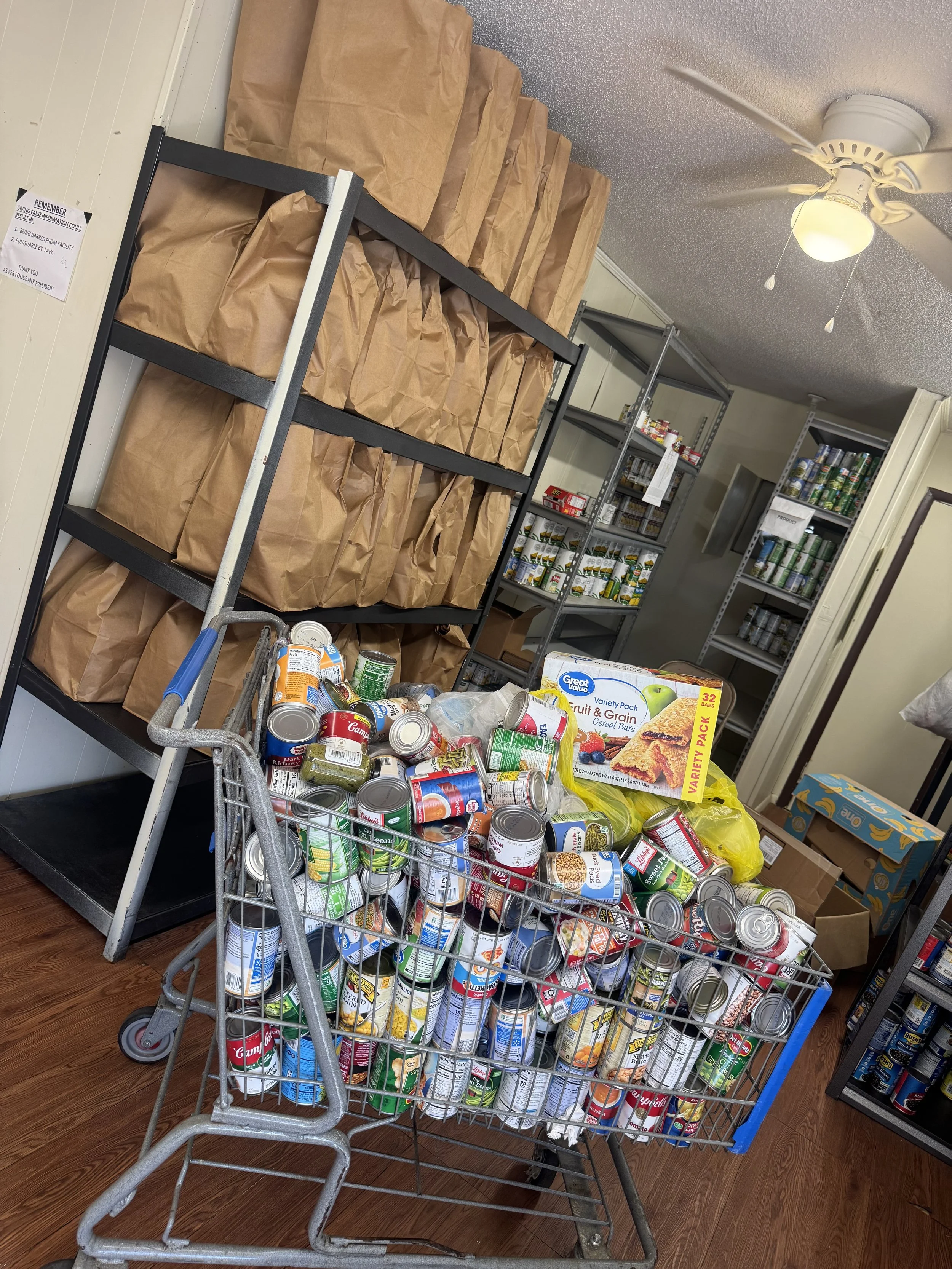
Every bag on that shelf was filled by hand, and every can either came in as a donation or had to be bought outright — a reminder of how much labor and cash it takes to keep a pantry like this stocked. It's a common irony in food assistance: the neighborhoods that need a food bank most often have the least capacity to fund one locally. That gap has to be filled from outside.
What They're Asking For
The wish list is concrete: canned vegetables, beans, soups, and meats; peanut butter and jelly; cereal and breakfast bars; pasta, rice, and potato flakes; boxed mac and cheese; shelf-stable milk. Staples that stretch, that are easy to sort and easy to turn into real meals. Churches, schools, banks, and local businesses often serve as informal drop-off hubs during drives.
Cash donations matter just as much, if not more — they let the food bank buy exactly what's running low.
Why It Matters
It would be easy to see this as small — a modest building, a handful of volunteers. But for the families who rely on it, the Tift area Community Food Bank is the difference between a full pantry and an empty one. In a county where roughly one in five residents live below the poverty line, that kind of steady support isn't a nice extra. It's infrastructure.
Volunteer-run organizations like this one run on a kind of stubborn optimism — the belief that if enough people show up with a few cans or a few hours, no one nearby has to go without. That belief has kept this food bank going for more than forty years. But belief doesn't restock shelves by itself. Donations do.